We all know the pressure finance teams face in the fast-paced world of consumer goods and retail. Shifting consumer demands, complex supply chains, and unique regional dynamics create a perfect storm where delivering accurate forecasts and closing the books on time can often feel like an impossible task.
Recently, a financial transformation project we delivered for a leading client in the consumer products sector demonstrated exactly how to turn the “impossible” into a “routine and streamlined” process.
I want to take you behind the scenes of this journey.
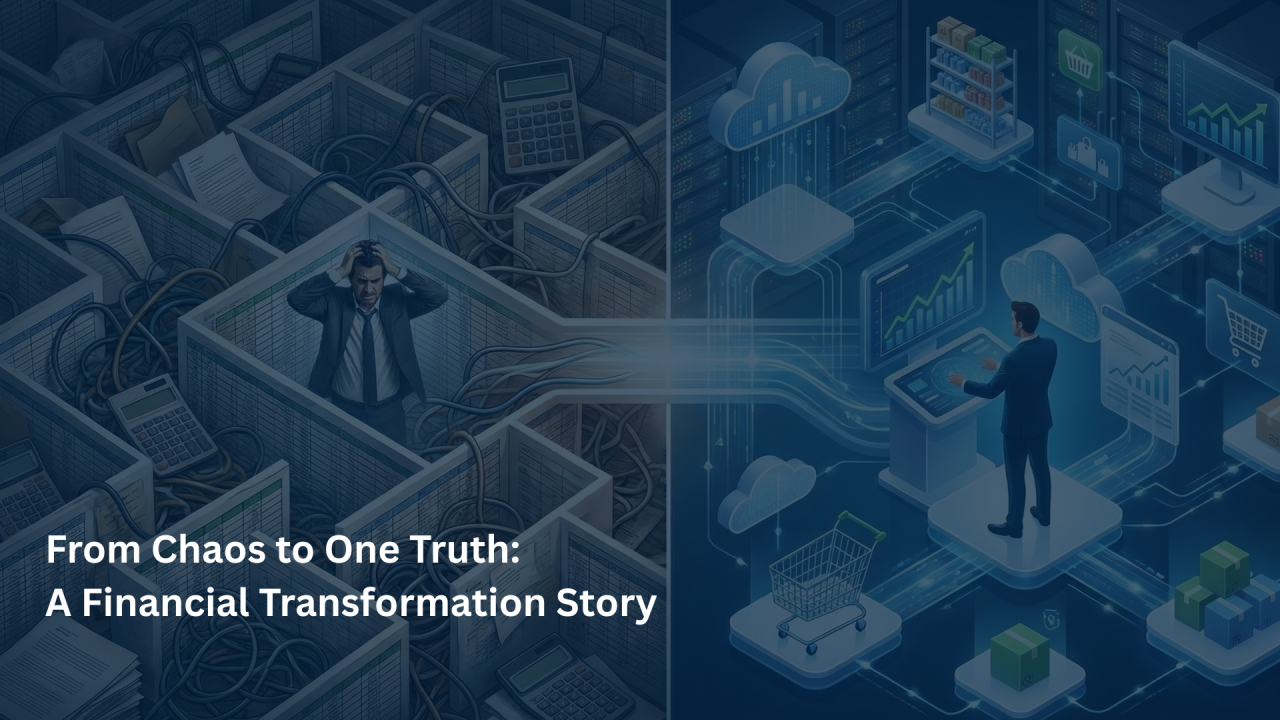
Before Transformation: The Excel Labyrinth
Our client operates across a vast range of product categories and diverse geographies. However, as the organization scaled, managing financial processes became increasingly difficult. It became evident that growth was outpacing their systems, leading to declining forecast confidence.
The scenario we encountered will be familiar to many finance leaders:
- Fragmented Planning: Budgeting and forecasting processes were scattered across dozens of disconnected Excel files.
- Manual Consolidation: The close cycle was a time-consuming process riddled with manual interventions.
- Visibility Issues: Gaining a clear picture across product lines or regions took days, not minutes.
- Technical Dependency: Even minor reporting changes required support from the IT team.
In short, the finance team was struggling to validate and aggregate data rather than guiding strategic decisions.
The Solution: A Modern and Integrated Financial Backbone
Our objective was clear: Reduce manual workload and establish a “Single Source of Truth.” To achieve this, we deployed a modern SAP analytics architecture designed to drive speed and accuracy:
- SAP Datasphere: Acting as the central data management layer to ensure data integrity and a unified view across the organization.
- SAP Analytics Cloud (SAC): Powering planning, budgeting, and forecasting to accelerate decision-making and agility.
- SAP S/4HANA Group Reporting: Streamlining group consolidation to shorten closing cycles and minimize compliance risks.
How Did the Transformation Unfold?
This was not just a software implementation; it was a structured three-phase journey to change the way business is done:
1. Discovery & Design: We started by listening. We identified bottlenecks in existing planning and closing cycles and pinpointed the finance team’s real pain points. Instead of replicating legacy processes in a new system, we modernized the workflows to meet future needs.
2. Building the Data Foundation (SAP Datasphere): We consolidated actuals, master data (products, regions, cost centers), and historical financial data into a centralized hub. This provided a governed, high-performance foundation for all planning activities.
3. Planning & Consolidation Enablement (SAC & Group Reporting): We implemented scenario-based planning, automated consolidation, and intercompany eliminations. Finally, planned and actual data were speaking the same financial language.
The Outcome: Shifting from Reactive to Proactive Finance
The result was more than just a new system; the finance function unlocked strategic bandwidth and unwavering decision clarity.
- Collaborative Agility: Planning cycles are not just faster but more interactive, allowing for real-time scenario modeling.
- Operational Relief: Manual Excel reconciliations are a thing of the past, removing the “error anxiety” from the closing process.
- Empowered Decision Making: The organization is far more agile, capable of responding to market changes with trusted insights.
A quote from our client’s Senior Finance Leader summarizes the impact perfectly:
“The new planning and consolidation landscape has fundamentally changed how we work. We now spend less time reconciling numbers and more time analyzing and supporting the business.”
Modern finance isn’t just about reporting the numbers; it’s about seeing the story behind those numbers in real-time.